> For the complete documentation index, see [llms.txt](https://digicorplabs.gitbook.io/docs/llms.txt). Markdown versions of documentation pages are available by appending `.md` to page URLs; this page is available as [Markdown](https://digicorplabs.gitbook.io/docs/documentation/tutorials/dgmv-token-how-to-access-the-dgmv-token-on-the-ledger.md).
# DGMV token-How to access the DGMV token on the Ledger
Since the DGMV token won't appear directly on Ledger Live, you'll have to utilize your Ledger device along with an alternative platform named MyEtherWallet (MEW). MEW is specifically tailored for Ethereum assets and offers support for a broader range of ERC20 tokens compared to Ledger Live.
1. Go to [myetherwallet.com](https://www.myetherwallet.com/)
2. Click on “Access my wallet” on the right upper corner
3. Choose the option “Hardware Wallets”
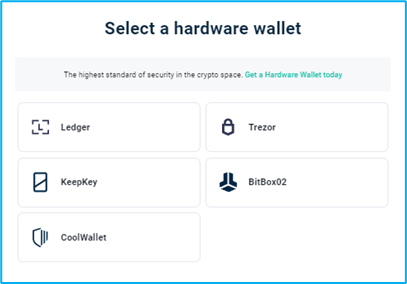
4. Select Ledger
5. Choose how you want to connect your Ledger device (Bluetooth or USB) and choose the Network
6. In the pop-up window click on you Ledger device’s name
*Note: If your Ledger device doesn't appear please make sure that it is connected properly. Double-check the connection and that the Ethereum app is open and then enter your PIN to confirm.*
*If you're using Ledger's Bluetooth connection on Google Chrome, you may need to set Bluetooth permissions to Enabled (they are usually set to Default). Paste the following link in the Chrome browser to be taken to the relevant settings: chrome://flags/#enable-web-bluetooth-new-permissions-backend*
7. Click “Connect”
8. Confirm this action on your Ledger device
9. Select your preferred network and path for connection
10. Click “Access my wallet”
**Adding the DGMV token to MyEtherWallet**
11. Copy the DGMV contract address 0x8eedefe828a0f16c8fc80e46a87bc0f1de2d960c
*Note: Please ensure to double check you are using only this official contract address*
12. In your MyEtherWallet Dashboard click on the three dots under the “My Tokens Value” section
13. Paste the previously copied contract address in the “Contract address” field
14. Click “Next”
15. Verify the details and click on “Add Token”
The DGMV token has been added successfully as a custom token and will now show up in your “My Tokens Value” list.